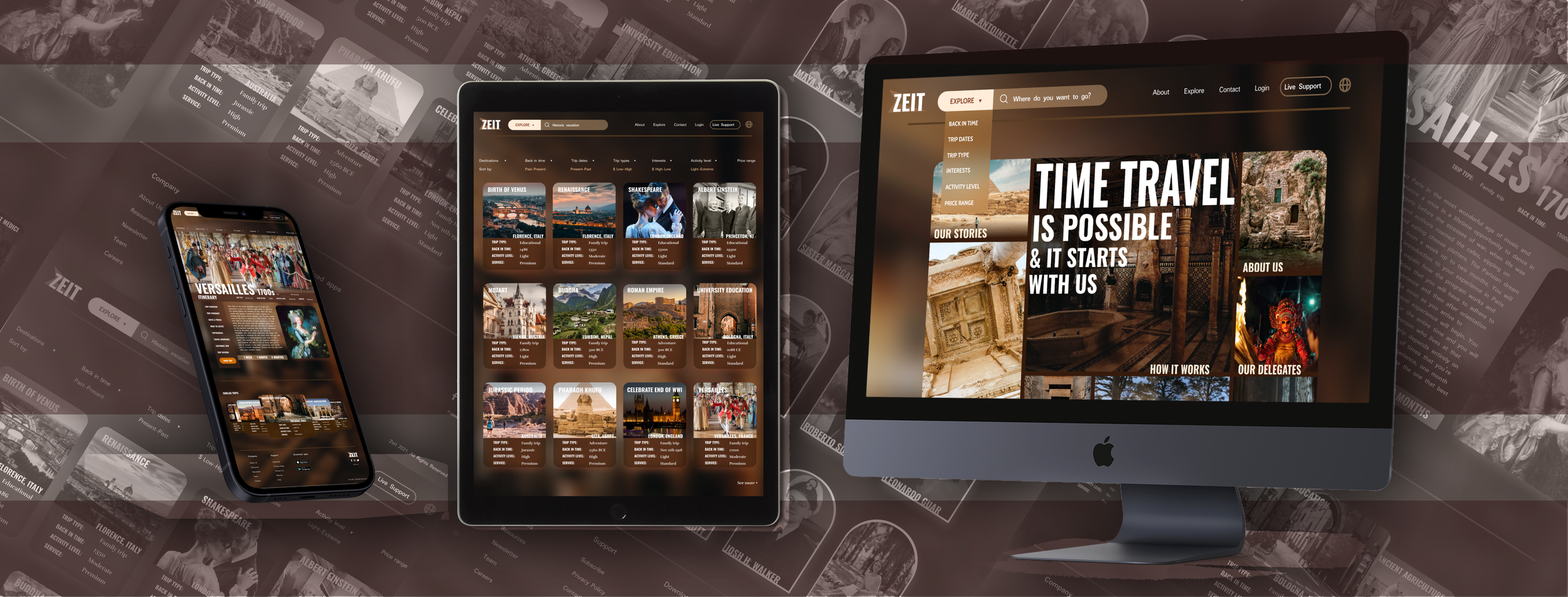
Zeit
Responsive Website
-
In a world where time travel is possible, a vacation booking e-commerce business exists to make a time travel vacation accessible and for good rates. Zeit is a Subsidiary of Richard Branson’s Virgin empire. Zeit has been given a set of standards by the International Concordance of time travel in Brussels, under which they can democratize the experience of time travel. As many as 289 destinations all over the world, from prehistoric times through today, have been approved for time travel tourism.
-
Problem
There isn’t a good, affordable and trusted way to travel through time for the general population.
Solution
Revolutionize the travel booking industry with life-altering time travel experiences.
Design a responsive e-commerce website that is easy to use and that allows customers to browse through different trip categories and details. Design a logo that can reflect modern technology with a link to a historical past.
-
Role: Product Designer
Methods:
Competitor analysis
Nielsen Norman Design Heuristics
Brad Frost's Atomic Design
User Research
User Interviews and Co-Discovery
Card Sorting
Journey Maps and Task Flows
Heuristics Evaluation
Usability Testing
Affinity Mapping
Wireframing and Prototyping
-
How does time travel work?
Booking with Zeit is easy.
Browse through the destinations and time travel packages on our website. You have the option to search by locations, interests, time periods and keywords.
Pick your travel dates and browse our selection of stays. You can choose from complete immersion with locals of the time period to our specialty all inclusive time travel resorts.
Book your package and any add-on experiences that are offered at your chosen destination. Depending on location, you can choose from participating in historic balls, sailing with pirates, witnessing transformative speeches to personalized tours of old towns by the locals.
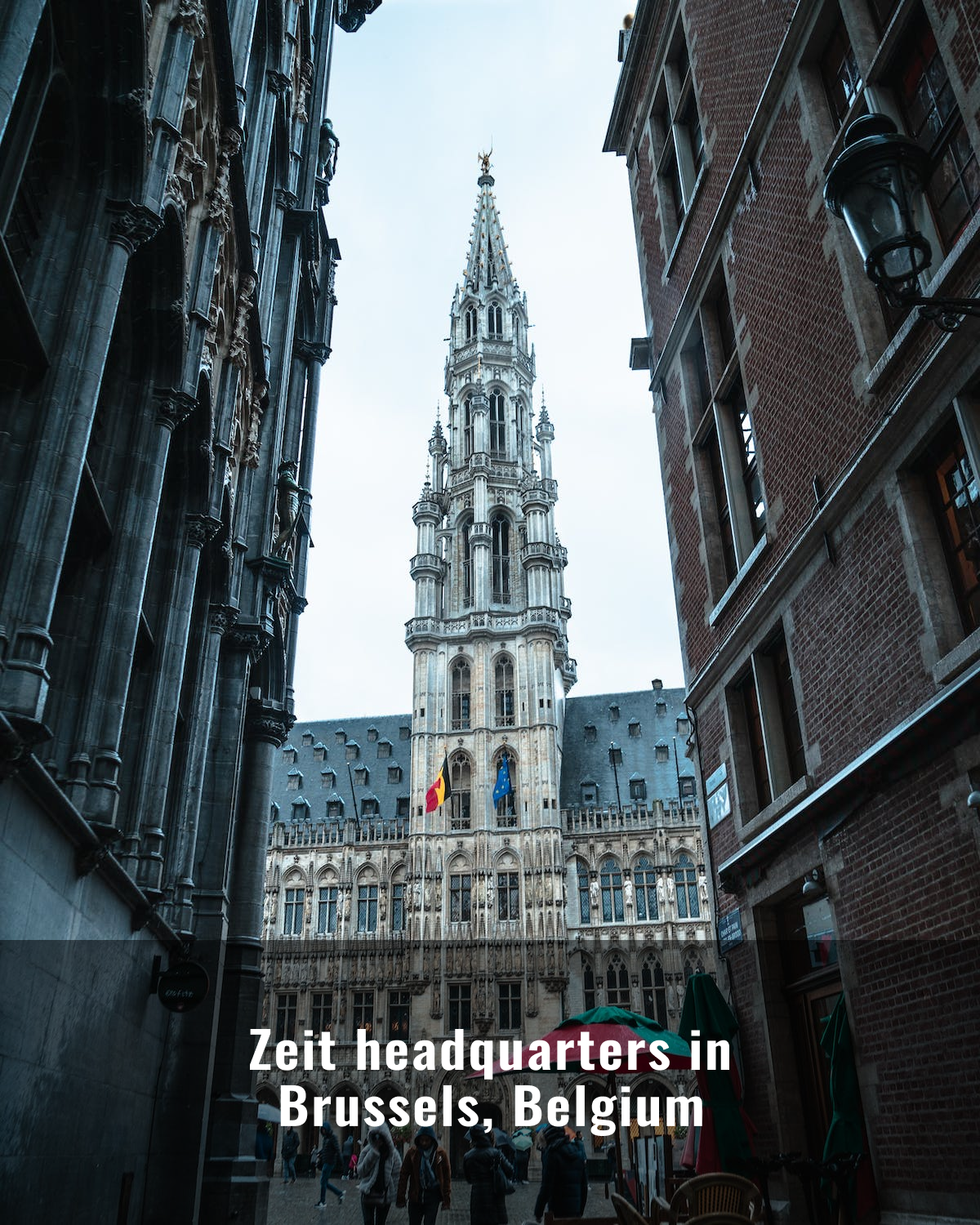
Travel to Zeit’s headquarters in Belgium where you will travel through the first portal of our time.
Your safety is our first priority. After years of extensive research and advancements in technology, Zeit has changed the travel industry forever.
-
During your stay in the past
Stay with our carefully selected delegates or at our 5 star time travel resorts.
Choose your stay wisely as per safety reasons, one may not revisit the same destination.
Travel for the amount of time you have off work.
Whatever time passes in the past, that is the amount of time you will have in the present. Unfortunately, time off cannot be doubled or tripled by time travel with Zeit. We would probably get sued by your workplace if we were capable of such benefits.
Head back to the current time directly through the portal at your stays. We provide a portal for your to travel through at your destination. Whether your stay is at one of our resorts, an apartment or full immersion with the locals, each location has a portal at your convenience.
From our headquarters in Brussels, Belgium to your home. This is the last step in the process and we count the days to your next booking with Zeit!

Research
Market Research | Competitive Analysis | User Interviews
Research Goal
Understand modern day users needs and wants when it comes to traveling and apply it to time travel so that the business will thrive.
-
Properly addressing users safety concerns for a new service or product.
Calculating risk. Money loss, population loss, complications.
Understand the appeal of historical destinations to potential clients.
Selling packages quickly and easily with smooth processing, without returns.
Investigate whether there is enough of a market for this service.
Structure a business model that would bring revenue while providing competitive prices for its users.
Understand how to build trust and keep users safe with this service.
Find the indirect competitors and bring business above the competition.
-
Users want to have the option of traveling to many significant historical locations
Users are interested in cheaper vacation packages.
Users are open to traveling through a time portal.
Users trust reviews and background checks.
Users are proficient with technology.
Users are open to staying with important figures in the past.
Users want flexibility in their travels.
Users enjoy or at the very least don’t mind a social aspect in their travels.
Market & User Research
I began my research with articles from travel and business magazines like National Geographic, Business Insider, newsletters, travel blogs, tech blogs, public forums on travel experiences, exciting airbnb destinations, vacation exchanges and desired transport options.
Competitive Analysis
Overview
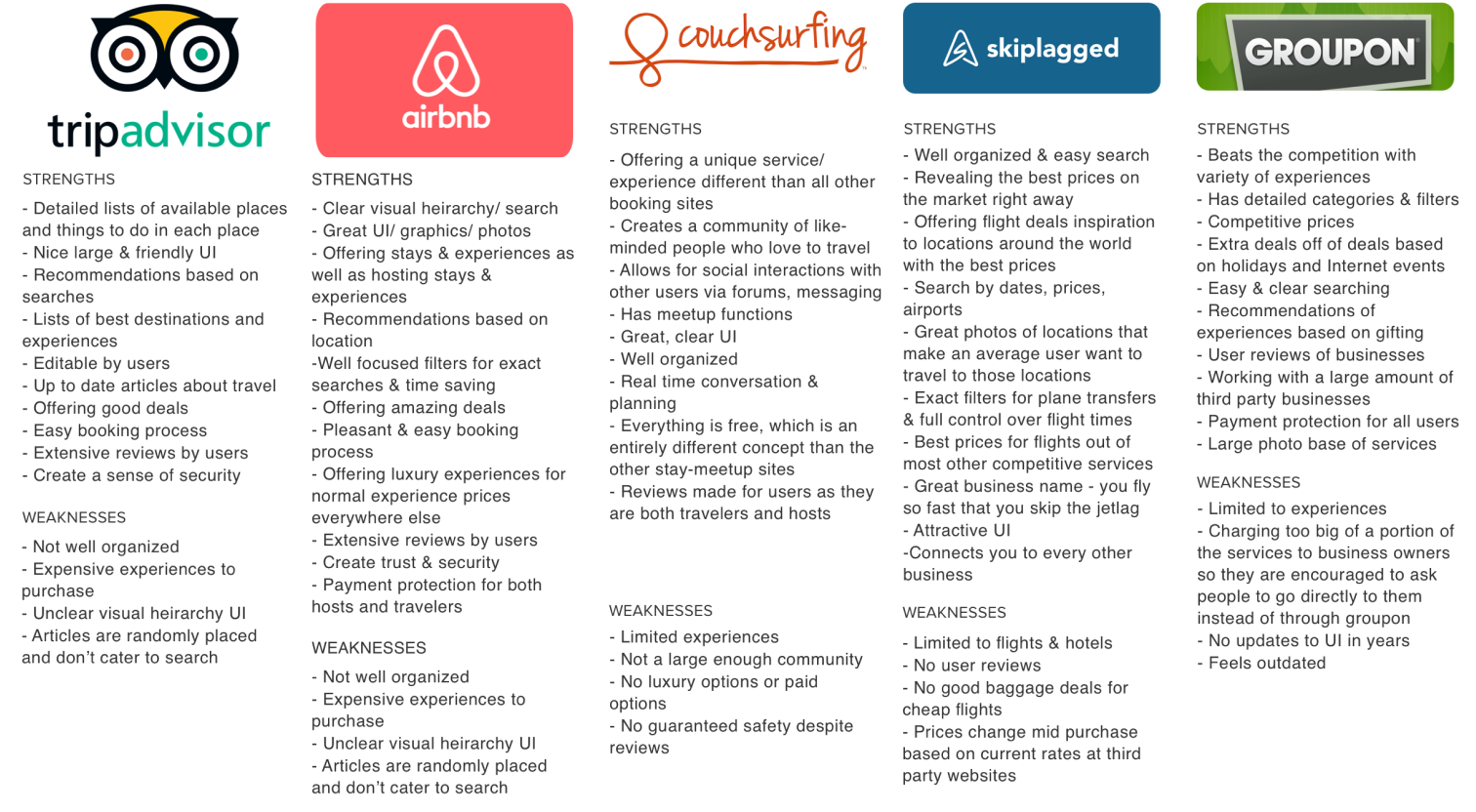
It's interesting to see how different age groups and personas have different needs from a business and especially a revolutionary business that does not exist yet like time travel. Zeit plays many roles for each individual. It is how luxury is met by different age groups and social classes. It beats the competition in every way because of the added feature of time travel, but will also have higher stakes due to time traveling hazards that do not exist in regular travel. Zeit caters to every age group while some competitors cater to specifically young adults with their features.
Secondary Competitors Indirect Competitors
User Interviews
Having collected data on the market of existing businesses along with the traveling trends and patterns, it was time to give the statistics some life. I prepared questions for 4 potential users to get a better understanding of their travel needs. This helped me see how relevant Zeit would be in the current travel market. The interviews were in depth and lasted for about 30-45 minutes each, and covered topics such as favorite experiences, decades, destinations, time travel concerns and curiosities. Click to see each interview.

Card Sorting
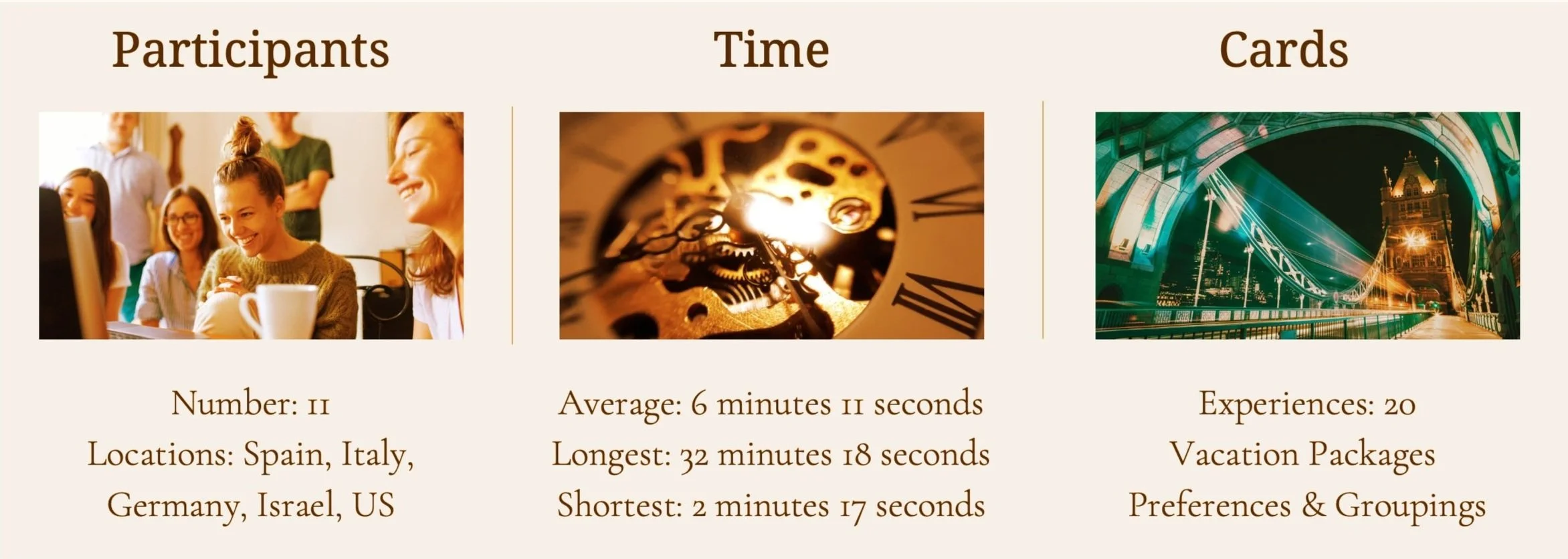
Card sorting was a highly effective research method in determining consumer preferences for temporal excursions. Participants were presented with a gamut of experiences, including the ability to submit their own original concepts. Subsequently, they were asked to categorize and arrange the experiences based on the degree of appeal. The outcome of this research exercise was a deep understanding of consumer priorities in regards to time travel experiences, thereby offering a sound basis for constructing a desirable product portfolio. In the following graph we are presented with statistics on the participants count, their location, how many experience cards they sorted and time spent on the exercise.
-
20,000 BCE: Earliest evidence of human agriculture, Israel
Arrive in the West Indies as Christopher Columbus claims the land for Spain, 1492
Be a dinner guest at the Medici family house in Florence or Tuscany in the 1400s
Be in Israel during the birth or life of Jesus, 4 BCE
Celebrate with the locals as World War I ends November 11, 1918
Experience India during the life of Buddha 500 BCE
Experience life at the royal courts in the palace of Versailles under the rule of Louis the Sun King in the 17th Century France
Experience the beginning of university education , 1088 CE, Bologna, Italy
Live in Greece and witness Alexander the Great creating the Roman empire, 300s BCE
Live in a Spanish town as Spanish and English Explorers Returning to Europe Bring Back New World Foods, 1500s
Live in the age of the samurai in the 1500s
See how Michelangelo paints the ceiling of the Sistine Chapel in Rome, 1508-1512
See how Sandro Botticelli paints the Birth of Venus in 1486
See the Ancient Egyptians build the Great Pyramid of Giza for Pharaoh Khufu: c. 2560 BCE, Egypt
Sit in on Einstein‘s lectures at the Institute for Advanced Study in Princeton, New Jersey, 1930s.
Stay safely at a resort and go on excursions to photograph Dinosaurs & cavemen,Jurassic period, Australia
Volunteer with lady Diana in the early 90s, England
Watch Mozart give a live performance, 18th century, Vienna
Watch one of Shakespeare’s plays, late 1500s, England
Witness the beginning of the Renaissance in 1350, Florence, Italy
-
Out of the top wanted experiences:
5 cards were categorized as Events
7 cards were categorized as Time Periods
9 cards were categorized as Not Interested
10 cards were categorized as Most Wanted
-
Watch Mozart give a live performance, 18th century, Vienna
See how Michelangelo paints the ceiling of the Sistine Chapel in Rome, 1508-1512
Be a dinner guest at the Medici family house in Florence or Tuscany in the 1400s
Stay safely at a resort and go on excursions to photograph Dinosaurs & cavemen,Jurassic period, Australia
Experience life at the royal courts in the palace of Versailles under the rule of Louis the Sun King in the 17th Century France
Sit in on Einstein‘s lectures at the Institute for Advanced Study in Princeton, New Jersey, 1930s
Experience the beginning of university education , 1088 CE, Bologna, Italy
-
Arrive in the West Indies as Christopher Columbus claims the land for Spain, 1492
20,000 BCE: Earliest evidence of human agriculture, Israel
Experience India during the life of Buddha 500 BCE
Be in Israel during the birth or life of Jesus, 4 BCE
Live in Greece and witness Alexander the Great creating the Roman empire, 300s BCE
Volunteer with lady Diana in the early 90s, England
Debrief
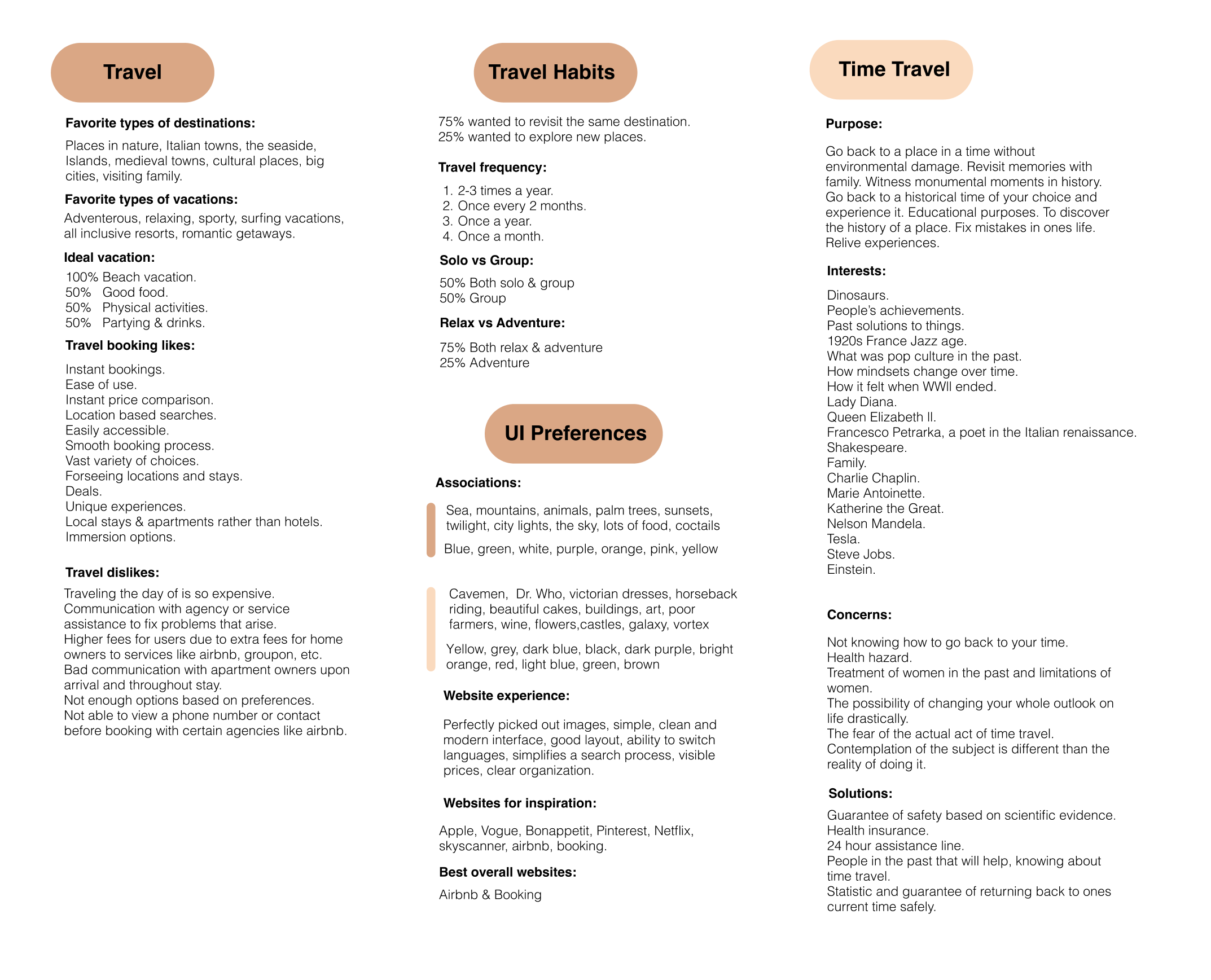
In this debrief I process the information that was given to me during my interviews. At this stage I worked quickly to categorize users by interests to help the business thrive. Such interests include the travel habits of each participant, regular travel goals and and concerns, time travel curiosities, as well as their UI associations when they are looking to book a travel package. I also went ahead and asked them what their possible solutions would be to their time travel concerns to get a better idea about their expectations from Zeit.
Provisional Personas
A great way to break down user interviews is to make provisional personas. This process can be a preparation for proper user personas or it can be done instead of making user personas for businesses that have a smaller budget. It is already transferring the user interviews to a user persona state of mind. I applied my interview candidates’ answers to their interim personas and I categorized each persona by their generational needs.
We have our students who love organized group trips and are actively looking for internship opportunities.
Business travelers who are looking for a social experience between their work hours.
Adventure seekers who go for the thrill of the time travel experiences.
Retirees who potentially wish to revisit their past and require minimal risk travels.
Families that require multiple activities for each member.
Define
User Personas | Empathy Maps | Project Goals
User Personas
I synthesized the data I collected so far to create a target user for Zeit to become the voice of the users interviewed. Gustavo represents the population that’s intrigued by watching memorable historical events unfold in person. Having a visual representation of the persona helps make the data gathered clear and user friendly.

Empathy Maps
To go a step further, I added an empathy map that focuses on sensations, thoughts, vibes and user actions. It’s a way to see the inside workings of our users’ brains. These are based on complaints that I have witnessed in my user interviews and market research. You can click on the image to make it larger.
Project Goals
Zeit would address the concerns we see from our user personas. Concerns such as credibility, safety, comfort and affordability. It comes down to the very foundation of the business. What are the things that travel websites do not offer in the current market and how Zeit would be an intuitive solution. Here are the key features that Zeit would provide:
Customizable travel packages.
A great team in the present and the past.
Reviews for time travel experiences.
Prices and deals in full visibility.
Personalized search capabilities.
Guarantee of returning back to safety.
Ideate
Feature Roadmap | Sitemap | Task & User Flows
Feature Roadmap
Here you can see the most important features to be added to Zeit under ‘must haves’. It is also worth it to consider adding some of the ‘nice to have’ features because either way there are other websites that would allow clients to do such things as booking a travel package so while the ‘nice to have’ is not essential, it is certainly what will make it stand out. For example, 24/7 support online and over the phone. While other businesses are removing phone support options, having that extra option eliminates stress for travelers that are in need of immediate support.
To our left is a complete breakdown of all features and detail requirements for Zeit to properly complete functions prior to some testing to eliminate anything that isn’t an absolute necessity. This process serves as an instrumental precursor to establishing an appropriate site map and enables confident progression towards creating a robust feature roadmap.
Sitemap
Just as a book has a table of contents, a website has a sitemap. It encapsulates everything that the website has to offer the user. You can see the main navigation consisting of the search function, ‘about’ explanatory pages, ‘explore’ packages and services, ‘contact’ with user concerns and assistance, a login into the user account as well as a live support function. Inside the profile branch, users can navigate to their trip details, instructions, purchasing cart & history, wish lists, and blog entries. From there, they have the ability to publish articles based on their experiences with their trips to the past.

Task Flow
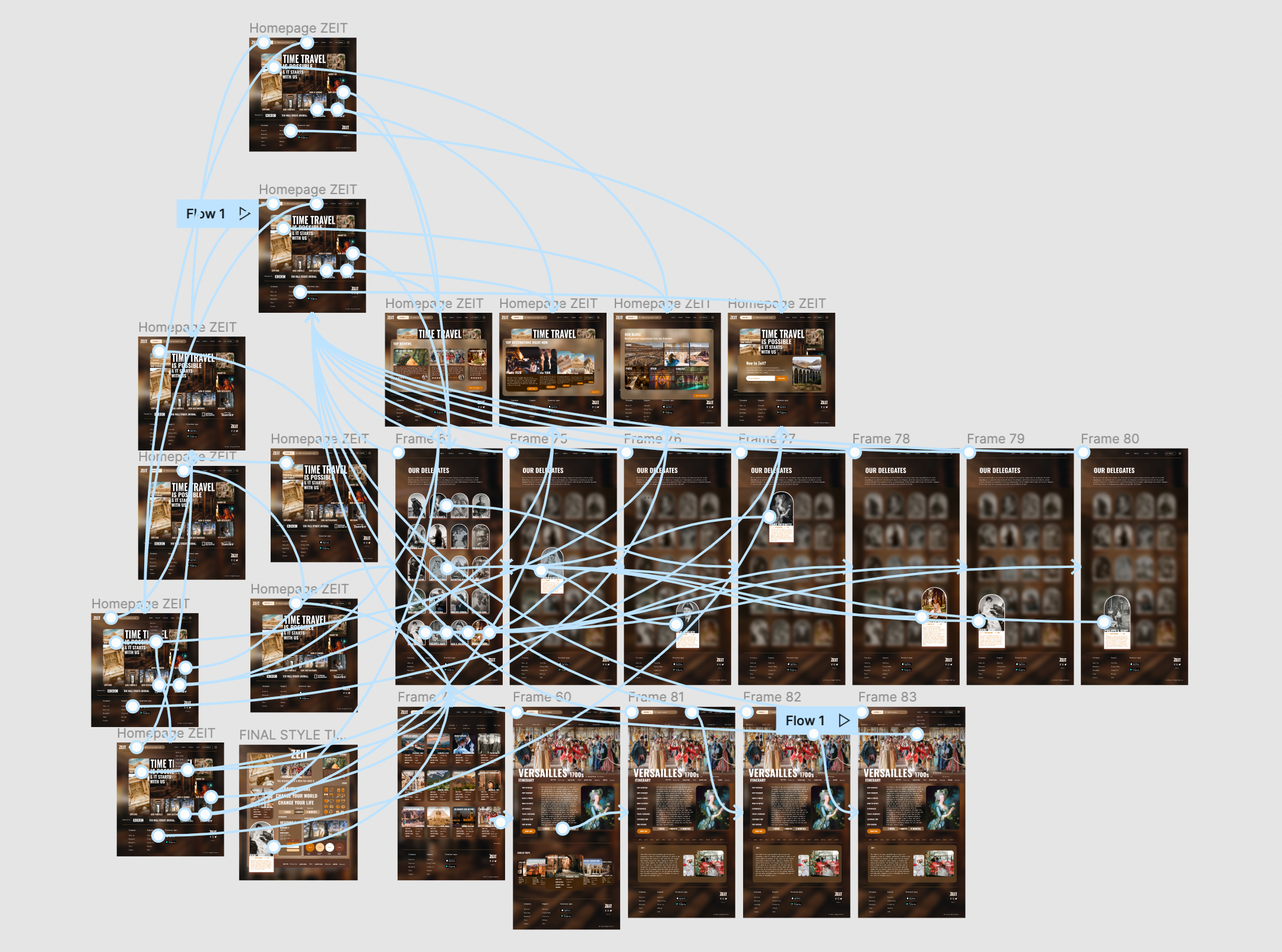
The task flow is a great way to visualize how users would interact with the website. You can find two categories. One is the user action and the other is the page that loads after the user takes the action. It could be to click, to select, to filter and to browse. In this task flow, I walk you through how a user requests a trip and books it.

User Flow
You are now acting on behalf of Gustavo Gonzalez, searching based on 2 categories. First route being the search for a century with an alternate route targeting locations. You are seeing his decision making process throughout his search, booking a time travel experience while making an account, alternatively continuing as guest, and following his steps all the way up to the confirmation email.

Design
Sketches | Wireframes | Brand Identity
Low Fidelity Sketches
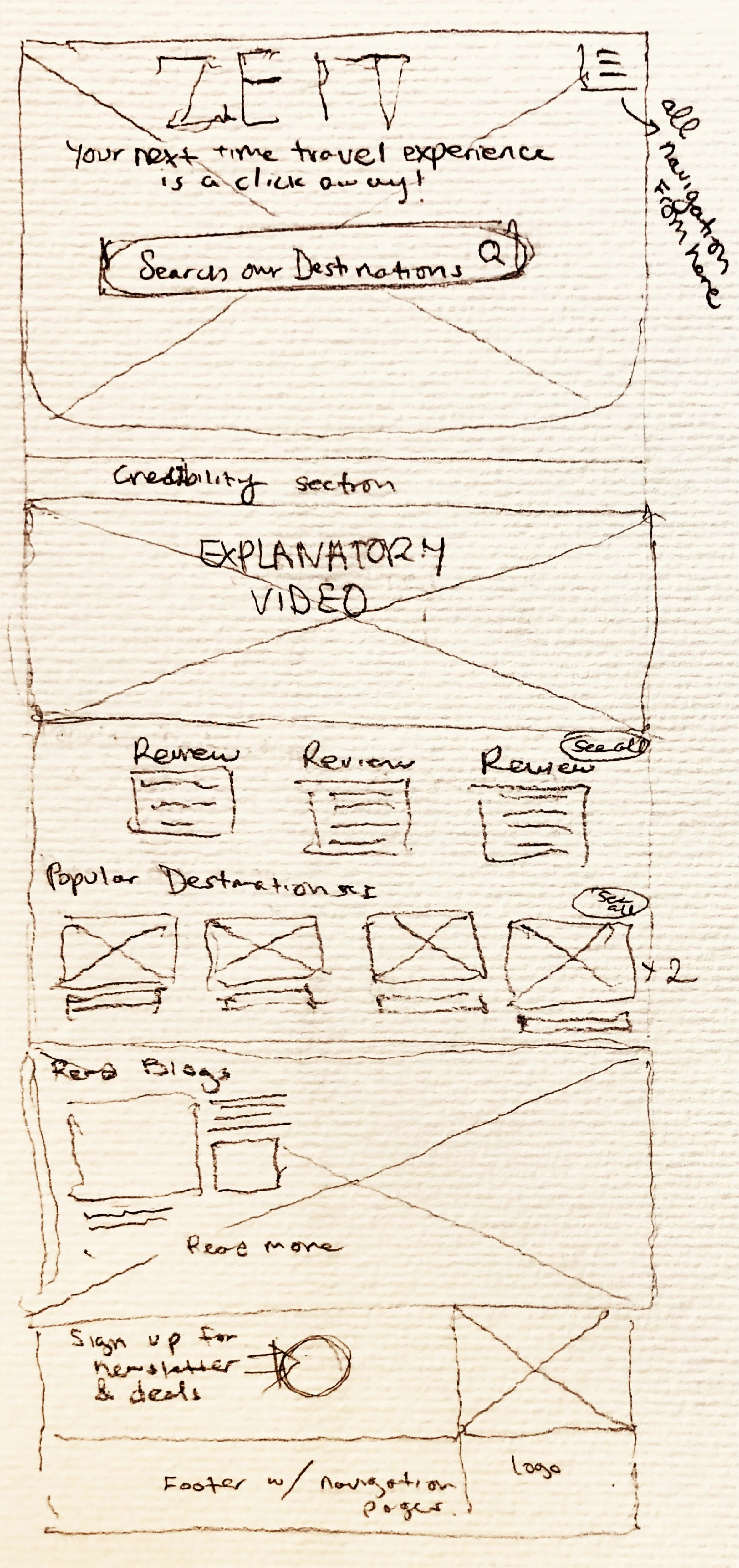
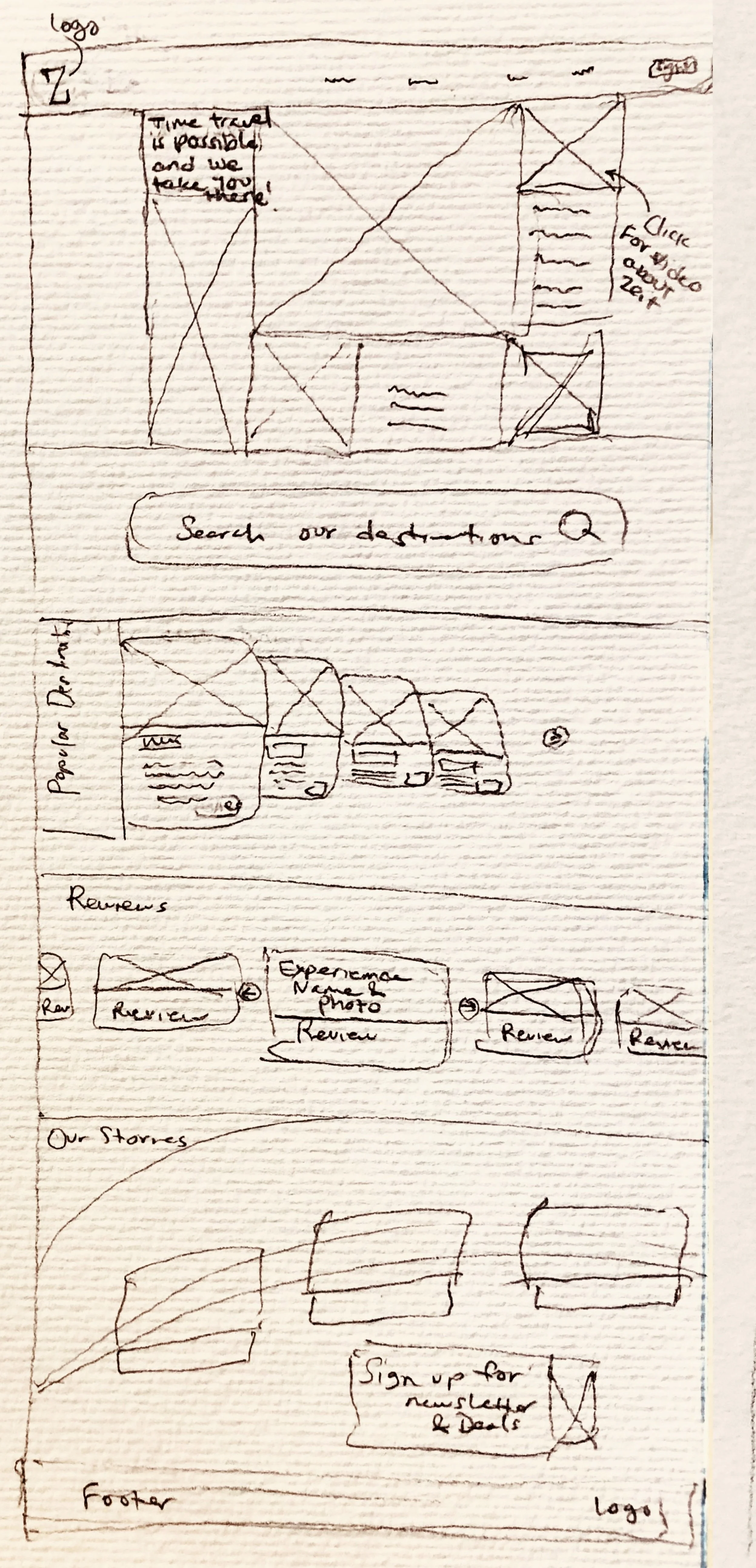
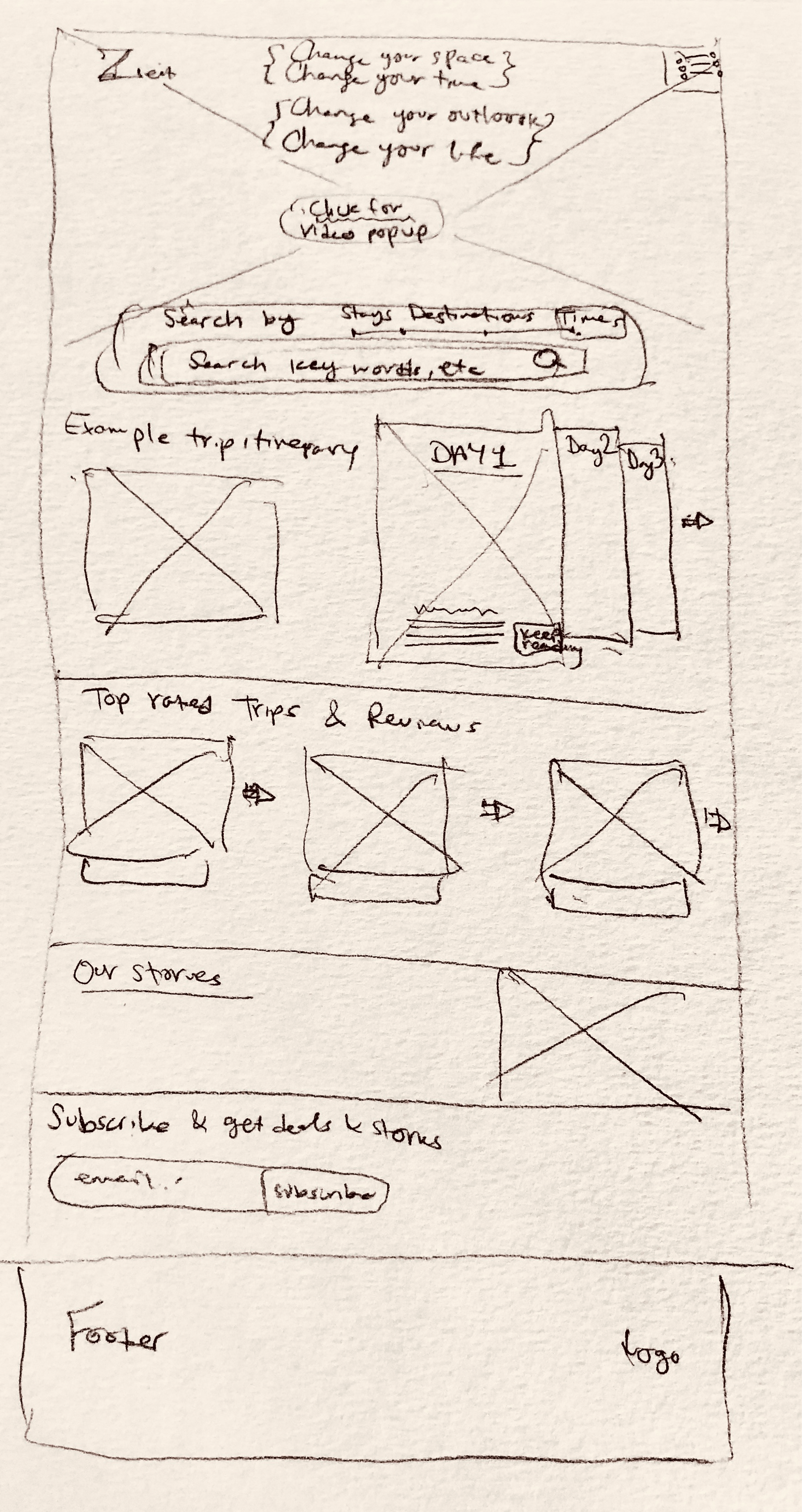
At this point in time, I was planning 3 variations for the homepage. I was looking for something that would hook the customers within the first few seconds of looking at the first image. Something that’ll leave them intrigued and wanting to click and expand. I decided to move forward with the middle version as it was the most interactive option that allowed for the most amount of information visible with the expansion of multiple sections.
Mid-Fidelity Wireframes
The mid-fidelity wireframes are the first look at the digitized project. It is as blueprints are to architects. Here, I got a better sense of my shapes and measurements. I added pages from the user’s journey to book a trip to France. At this point in time, the home page has material for scrolling down the page such as top reviews, how Zeit works, blogs, top destinations and a subscription to the service. The search exploration page reveals trip cards with a similar trips section. The third page I worked with was a trip detail page of Versailles in the 1700s.

Responsive Wireframes
Taking the homepage, I made a responsive design for tablets and phones.

High Fidelity Responsive Wireframes
In this version, I was able to begin to apply all of my research to the design of the responsive web pages. I opted for lighter colors at first to give it a fresh look that alleviates concerns related to time travel. For my provisional personas, orange was associated with a state of curiosity and excitement while maintaining calm. The shades of brown keep the user grounded with that hint of nostalgia. With the search bar front and center above the bolded ‘Time Travel’ title draws the user in to click on the nostalgically brown search button.

Brand Identity
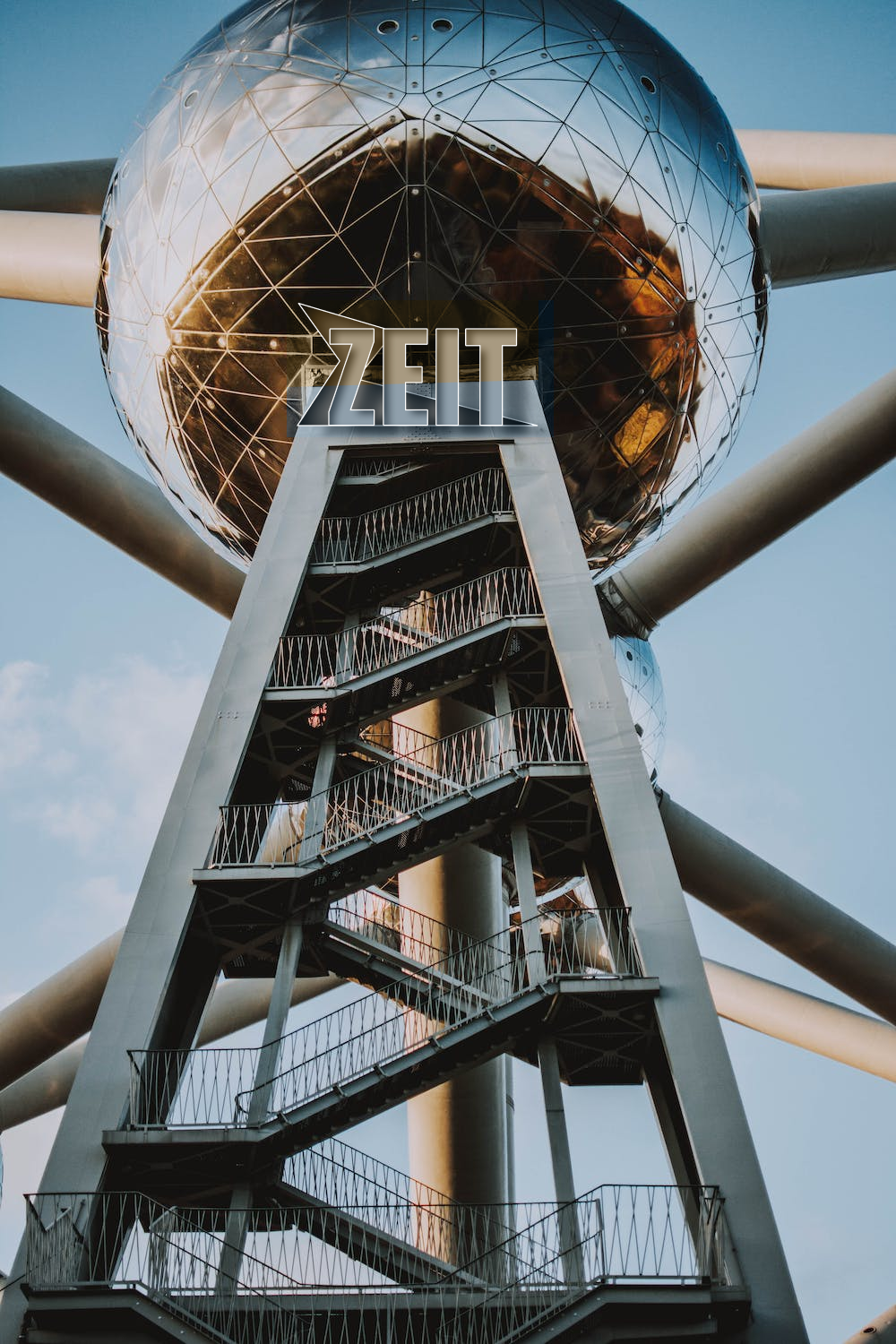
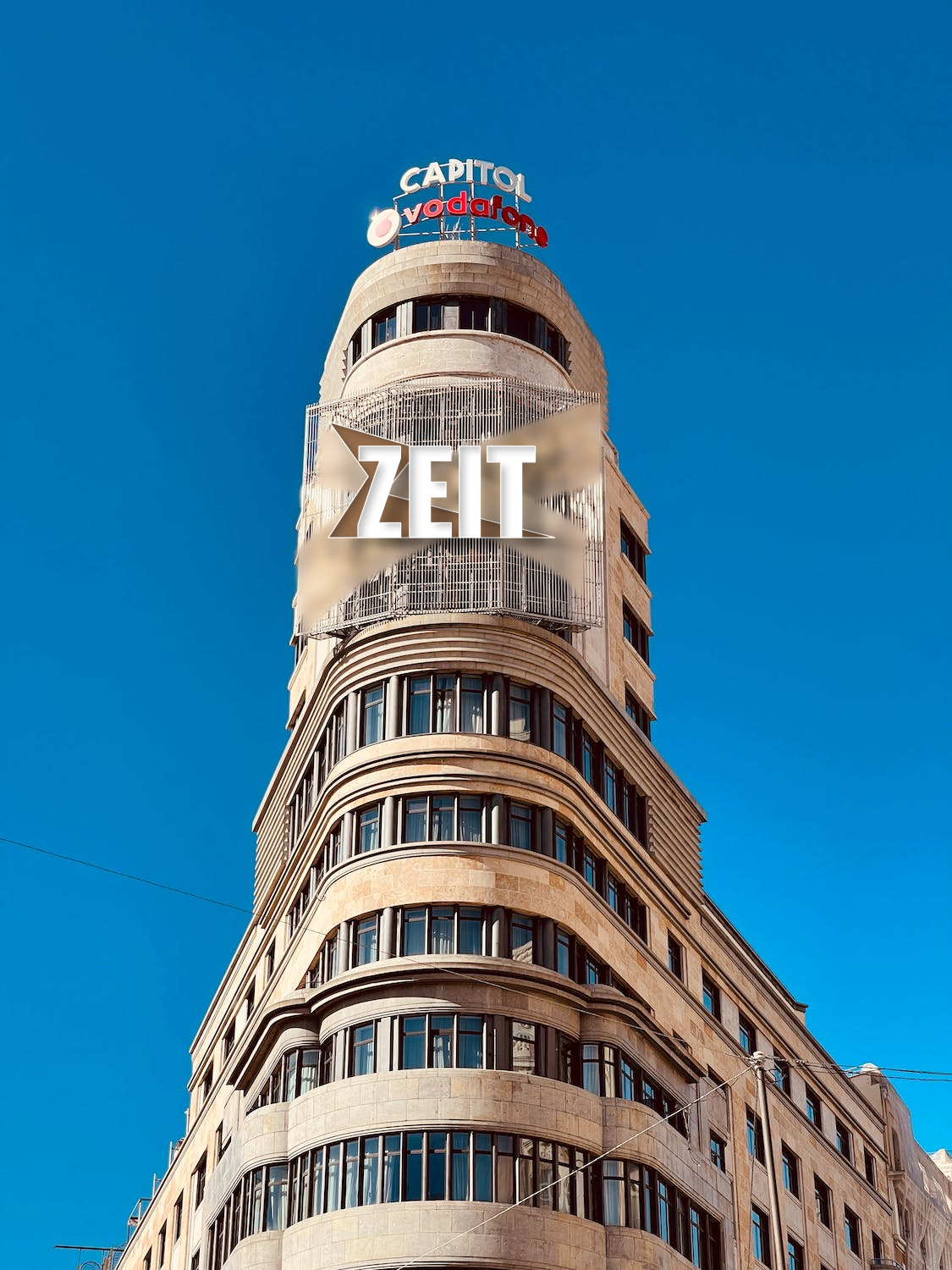
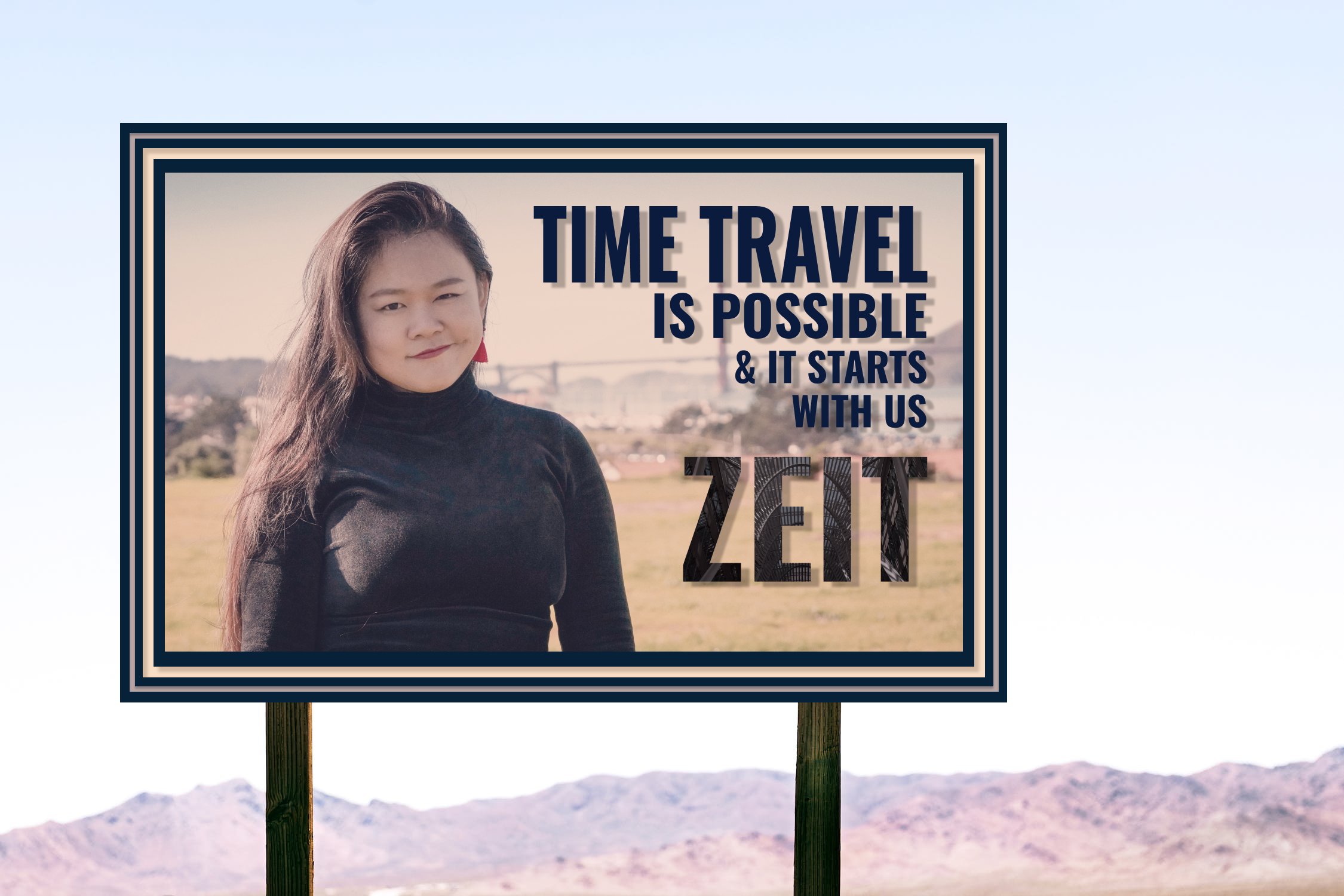
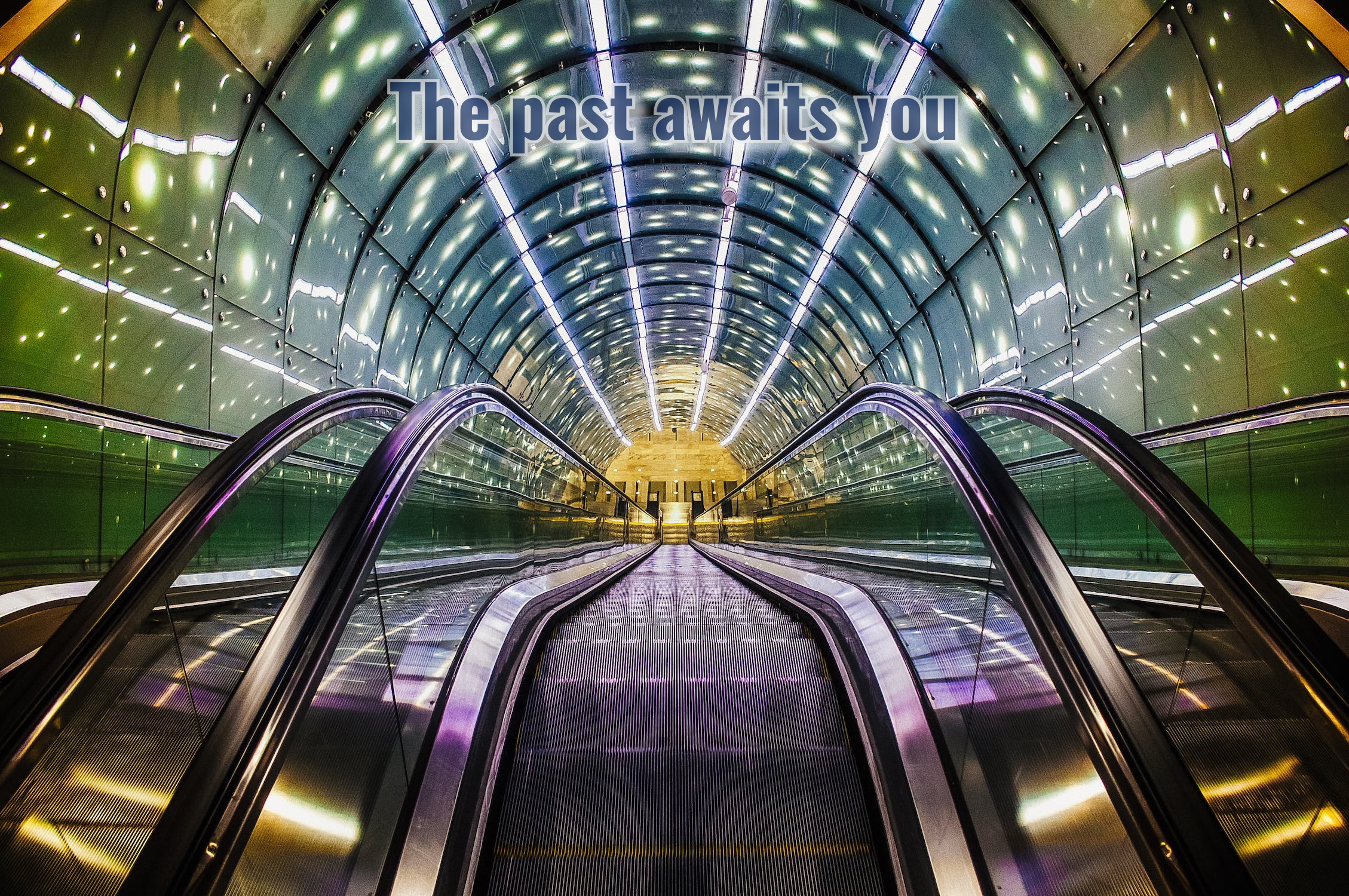
So much of what makes an app successful is branding. The way it is marketed could either promote the business to thrive or let it spiral.
UI
Mood board | Style Tile
Mood Board
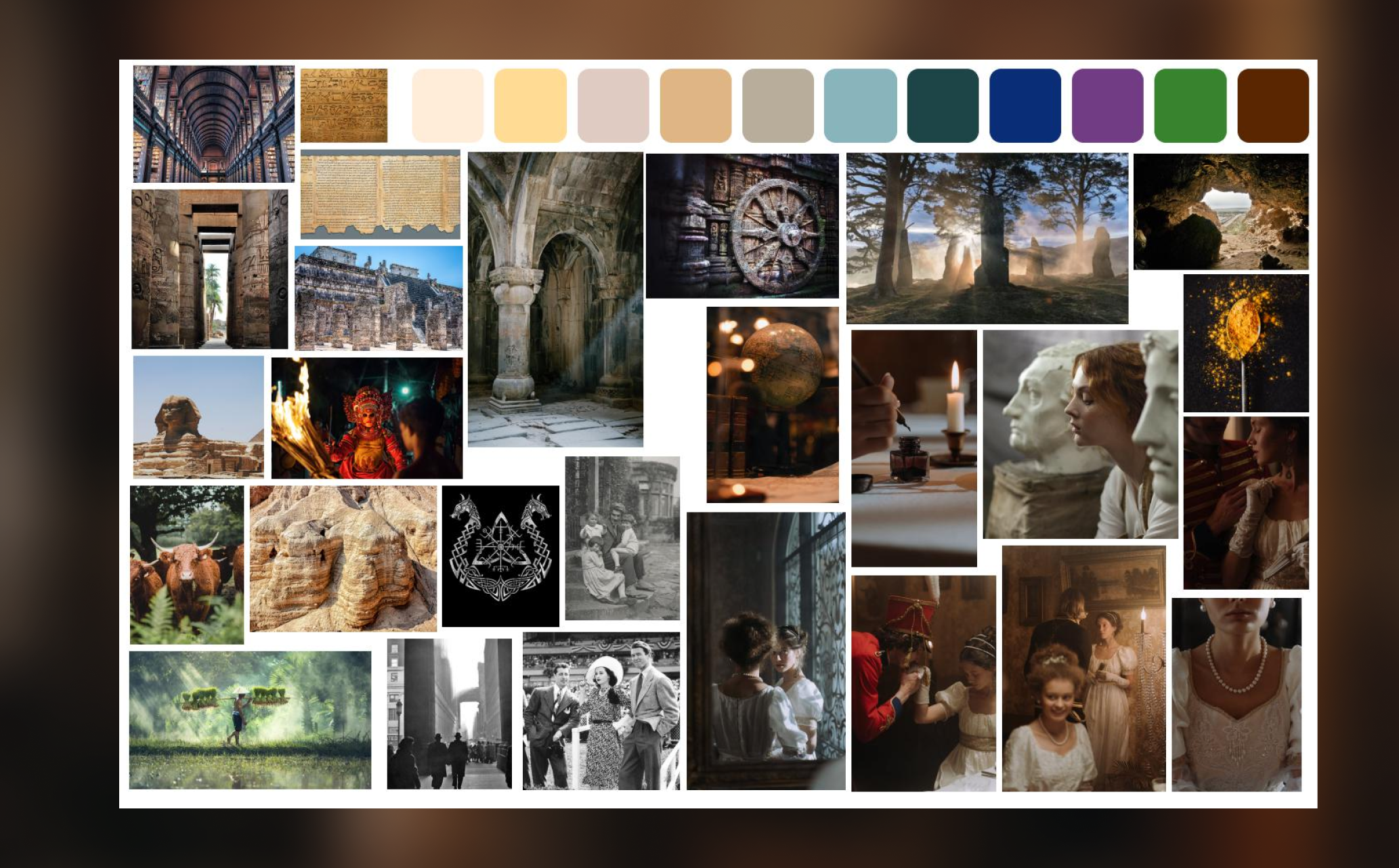
Through the mood board, you can see the images I referenced to help me create the darker historical nostalgia feel for the interface. The browns and beige colors are associated with grounds, vintage, memory and mysticism. Shades of green and purple add the combination of a naturally luxurious environment, which link to the experience having high accommodation standards, which Zeit would certainly provide. Our business has historically famous delegates in the past sharing their estates as accommodation so Zeit will not disappoint any aspect of luxury. I added a lot of images of caves, entryways and gateways to grand places as well as figures to emphasize the fact that in the experience of time travel, the travelers will be interacting with the past, not just observing it.
Style Tile
A style tile is presented in the same way that a construction tile is presented to a client in a home remodeling business. The client receives tile samples of flooring and walls, swatches of upholstery materials and all kinds of catalogs. A UI style tile holds all of its building materials on one tile: the font, color palette, cards, imagery and iconography.
A style tile in UX design provides a snapshot of a company's brand identity, and this particular tile captures the essence of a time travel vacation business. The orange color palette sets a lighthearted and relaxed tone, while the bold font of the company name and slogan, "Travel in time. Change your world. Change your life", conveys reliability and stability. The imagery, filled with breathtaking destinations, adds to the intrigue and excitement of the travel experience. This style tile effectively communicates the Zeit business' commitment to offering a fun, worry-free, and life-changing time travel experience.
The results of the usability testing on the style tile and its corresponding high-fidelity designs reveal that the colors utilized impart an unrealistic portrayal of events that lack a sense of historical accuracy. The feedback received suggests that this overly optimistic visual representation undermines the credibility of Zeit as a business. This highlights the need to reassess the style tile and incorporate more nuanced color choices to align with the company's ethos and reinforce its credibility in the time travel industry.
Prototypes
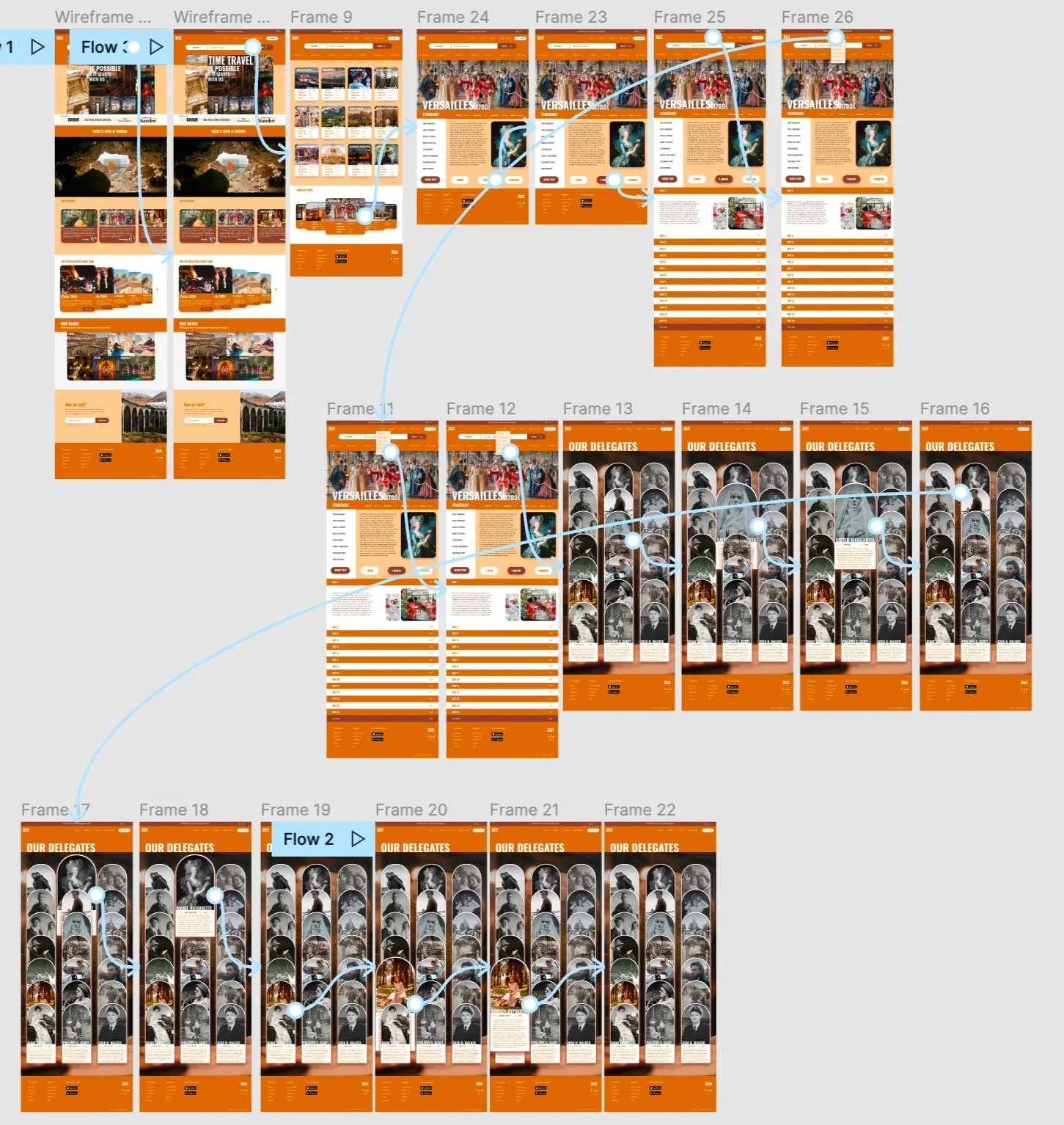
In this prototype, our selected user, explores different pop up links that open the previously scrolled material. Our user, eager to book a trip to the beautiful Palace of Versailles, navigated through our time travel vacation package website with ease this time around. As they progressed through the user flow, they were presented with an array of options to choose from, each offering a unique time travel experience. The user was able to easily filter through the different time periods and packages, until they found the perfect one that fit their needs. The interface and call-to-actions made it simple for them to proceed with their booking, They had the option to navigate to the specific trip page and view the itinerary. Throughout the entire process, the user was able to fully immerse themselves in the time travel experience, thanks to engaging visuals and the narrative. By the end of their journey, the user had successfully booked their trip to Versailles and was eagerly anticipating their upcoming time travel adventure.
Testing
Usability Testing | Affinity Map
Usability Testing
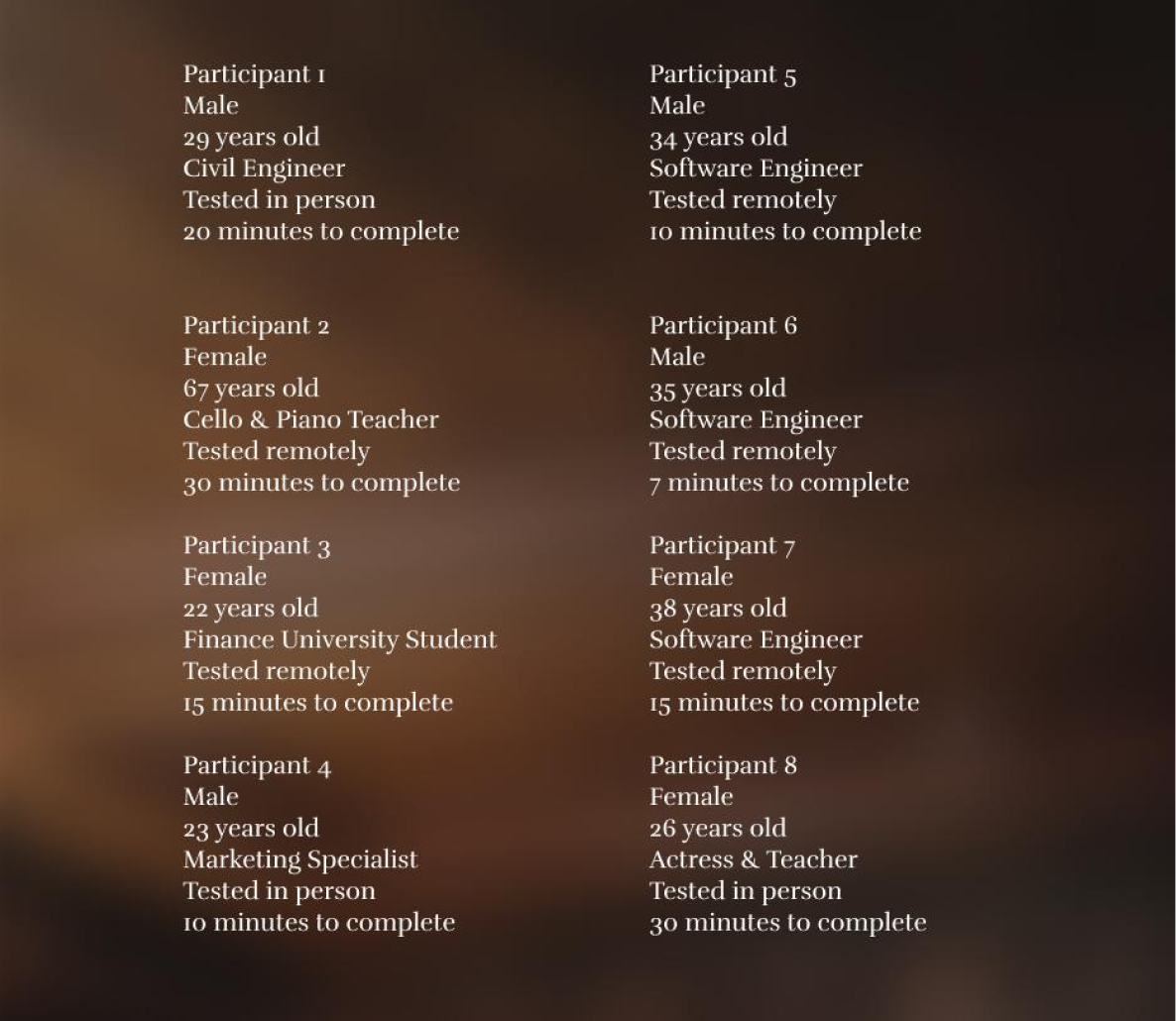
Zeit underwent two rounds of usability testing. The first one was for the old prototype and second with the new, darker, more sleek version. The testing was done with a diverse group of participants from various backgrounds. This diversity only serves to highlight Zeit's appeal as a business that caters to a wide range of consumers. The participants were impressed with the website's striking, dark design and ease of use, finding the process of purchasing trips to be particularly seamless. They also enjoyed the personal touch added by the UX writing, which brought the stories of each time period to life. The delegates depicted in the writing provided a way for participants to navigate the past and envision their upcoming time travel experience. Overall, the usability test was a testament to the potential success of Zeit as a unique and appealing business venture.
Affinity Map
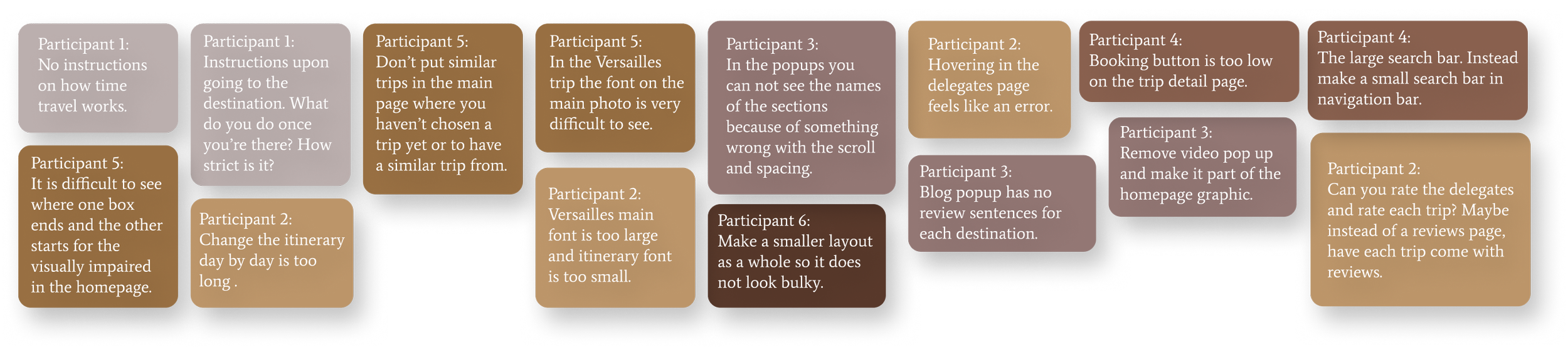
Click to enlarge the feedback I received after my usability testing interviews:
Disikes
Likes
Improve
Improvements
After conducting thorough usability testing, I was able to gather valuable feedback that informed the creation of the final prototype design. The design evokes a sense of nostalgia, capturing the essence of historical events. All technical issues identified by participants have been addressed and resolved, ensuring clear visibility of all elements on each page. The addition of blurred elements as drop-down menus adds a touch of movement to an otherwise static design. The deeper color palette was chosen to evoke a sense of mystery, reflecting the theme of time travel. The search bar has been moved to a more prominent location and improved for enhanced user-friendliness. Having the ability to return to any previous page gave a smoother navigation experience whilst having the ability to start anew at any point in time. The change in layout to the homepage has been a game-changer for presenting information. The new design allows for a wealth of information to be displayed without the need for excessive scrolling. This elevated design not only captures the viewer's interest but also holds their attention for a shorter amount of time. The improvement to the homepage layout has effectively made it more engaging and user-friendly, allowing Zeit to make a stronger impact on its audience. This strategic use of space and attention to detail has resulted in an improved user experience, making it easier for viewers to find what they are looking for and stay informed about the latest updates. Overall, the change in layout has proven to be a wise decision that has greatly benefited Zeit and its audience.


Final Designs
The creation of these designs was a thorough and enlightening process that was brought to production with careful consideration of user feedback obtained from usability testing. The resulting designs are a testament to an unwavering commitment to delivering exceptional user experiences and my deep understanding of what makes a design truly inclusive. In a world where time travel is possible and the travel industry is facing fierce competition, Zeit stands out as a beacon of innovation and creativity. Zeit offers travelers the opportunity to explore places they never thought possible, unlocking the doors to a world of endless possibility. This principle can be applied to any new product entering the market, as consumer opinions and preferences are of utmost importance. It is through the collection and analysis of consumer feedback that a product can truly differentiate itself in a market that is already highly saturated. With its unwavering commitment to excellence and customer satisfaction, Zeit sets a new benchmark for success in the travel industry, proving that by prioritizing the needs and desires of the customer, a product can not only survive, but thrive in today's fast-paced world.